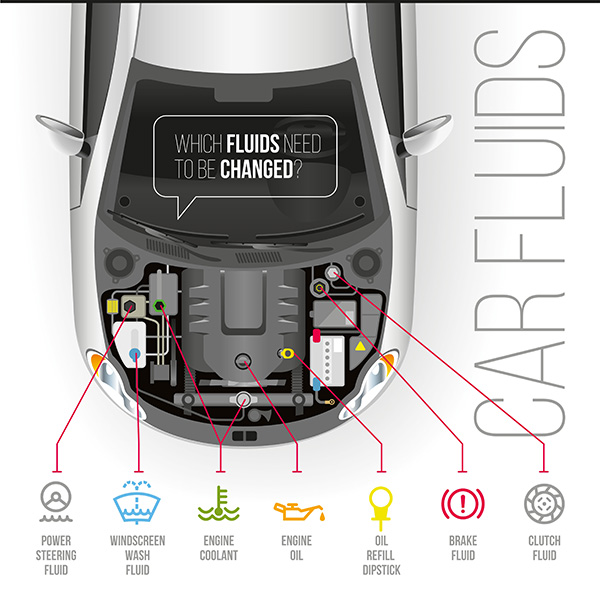
Fluids are easy to forget about until something goes wrong. The car still runs, shifts, and stops, so it feels like everything is fine. Under the surface, though, these fluids are constantly doing work to keep systems operating as they should.
When fluid levels drop or the fluid itself breaks down, performance starts to change. Knowing what each fluid does and how to check it helps you stay ahead of problems before they become expensive repairs.
1. Engine Oil Keeps Internal Parts Protected
Engine oil lubricates moving parts and reduces friction within the engine. It also helps carry heat away and keeps contaminants from building up in critical areas.
Checking engine oil is straightforward. With the engine off, locate the dipstick, remove it, wipe it clean, and reinsert it. Pull it out again to check the level and condition. Oil should be within the marked range and not appear excessively dark or gritty. Keeping it in good condition is a key part of regular maintenance.
2. Coolant Regulates Engine Temperature
Coolant, sometimes called antifreeze, helps control engine temperature and prevents overheating. It circulates through the engine and radiator, absorbing heat and releasing it through the cooling system.
You can check coolant levels by looking at the reservoir tank under the hood. The level should sit between the minimum and maximum lines. Only check coolant when the engine is cool, since the system is pressurized when hot. An inspection is helpful if levels drop without a clear reason.
3. Brake Fluid Supports Safe Stopping
Brake fluid transfers the force from your foot on the pedal to the braking system. Without it, the brakes would not respond the way they should. Even slight changes in fluid condition can affect stopping performance.
Brake fluid is usually stored in a clear reservoir near the back of the engine bay. The level should remain steady over time. If it drops, it can indicate worn brake components or a leak. Since braking is critical for safety, changes in fluid level or condition should be checked promptly.
4. Transmission Fluid Keeps Shifting Smooth
Transmission fluid helps manage pressure, lubrication, and cooling inside the transmission. It plays a major role in how smoothly your vehicle shifts between gears.
Some vehicles have a dipstick for checking transmission fluid, while others require a more involved process. When accessible, the fluid should appear clean and not have a burnt smell. If shifting feels delayed or rough, a fluid condition may be part of the issue.
5. Power Steering Fluid Helps You Turn Easily
Power steering fluid helps the system turn the wheel, especially at lower speeds. When levels drop, steering can feel heavier and less responsive.
The reservoir is typically labeled and easy to locate. Checking the level ensures it stays within range. If fluid continues to drop, there may be a leak that needs attention. Addressing it early helps avoid damage to the steering system.
Why Fluid Condition Matters as Much as Level
Having enough fluid is important, but the condition matters just as much. Over time, fluids break down due to heat, pressure, and contamination. Even if the level looks fine, degraded fluid can still affect performance.
This is why fluid service is part of regular maintenance. Replacing old fluid helps restore proper function and protects internal components from unnecessary wear.
Regular Checks Help You Catch Changes Early
You do not need to check every fluid every week, but getting familiar with their normal levels and appearance helps you notice when something changes. A quick look during routine checks can reveal leaks or drops before they become serious.
An inspection during scheduled service adds another layer of protection. Technicians can evaluate fluid conditions and identify early signs of problems that are not immediately visible.
When to Schedule a Fluid Inspection
If you notice low levels, changes in color, or differences in how your vehicle performs, it is a good time to have your fluids checked. Even small changes can point to something developing.
Staying ahead of fluid levels helps keep your vehicle reliable and reduces the risk of more costly repairs later.
Get Fluid Service In Cullman, AL, With Guthrie's Auto Service
If you want to make sure your vehicle’s fluids are in good condition and at the proper levels, Guthrie's Auto Service in Cullman, AL, can inspect and service your vehicle to keep everything running as it should.
Call today to schedule your appointment and keep your car protected from avoidable wear and damage.