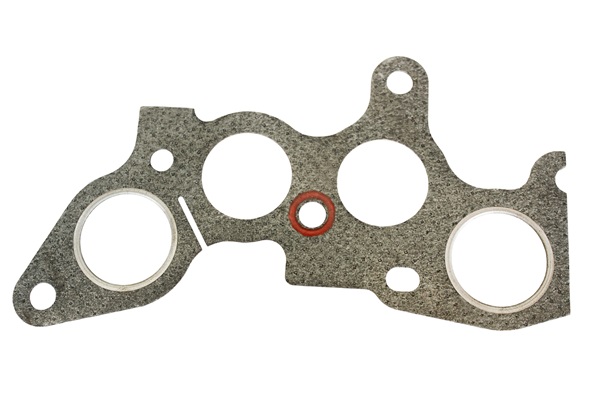
A ticking sound near the engine can raise the possibility of an exhaust manifold gasket leak. When the repair estimate also mentions a manifold, it is reasonable to ask whether the entire part needs replacement. Sometimes the sealing surfaces and fasteners are sound enough for a gasket repair; sometimes the manifold itself is damaged.
The answer comes from inspecting the leak and the components that hold the joint together. A new gasket cannot reliably seal a cracked manifold or correct every distorted flange. At the same time, a gasket leak alone does not mean an otherwise serviceable manifold must be discarded.
The Exhaust Manifold Gasket Seals a Hot Connection
The exhaust manifold collects gases leaving the engine’s cylinders and directs them into the exhaust system. Where the design uses a gasket between the manifold and cylinder head, that seal must withstand repeated heating and cooling. Fasteners maintain the clamping force that keeps the joint sealed.
Heat cycles, corrosion, damaged hardware, or movement in the connected exhaust can disturb the joint. Some engines use a different sealing design or integrate exhaust passages into the head. The technician should identify the engine layout before describing the repair as a simple gasket replacement.
An Exhaust Gasket Leak Can Produce Ticking or Soot
A small leak may create a sharp ticking or puffing sound, especially after a cold start. The noise can change as metal expands, but that pattern isn't proof of any particular failure. Soot near a sealing surface or broken fastener can provide additional evidence of where exhaust is escaping.
Other engine noises can sound similar, so confirm the source. A leak ahead of certain oxygen sensors may also affect the readings the engine uses to control fueling. Warning information can help the inspection, but it should not replace checking the manifold, flange, and related exhaust connections.
A Gasket Repair May Be Enough for a Sound Manifold
If the manifold is free of cracks and its sealing surface meets the required condition, replacing the gasket and correcting the fastening problem may be appropriate. The cylinder head mating surface also needs inspection. Damage or debris on either side can prevent a new seal from working as intended.
The estimate should account for the work needed to remove the manifold and restore the joint, not just the price of a gasket. Corroded studs or a broken bolt can increase labor. A thorough repair can therefore cost more than expected even when the manifold itself remains suitable for reuse.
A Cracked or Distorted Manifold Can Need Replacement
A crack in the manifold body is a different fault from a gasket leaking at the flange. Distortion can also prevent the assembly from clamping evenly. Whether a surface can be corrected depends on the part, available material, and the manufacturer’s limits; resurfacing isn't suitable for every manifold.
Some vehicles combine the manifold with a catalytic converter or turbocharger-related components, changing the scope and cost of replacement. Ask which part is damaged and whether you observed the damage directly. An explanation of the crack, surface condition, or integrated assembly helps clarify why the repair may include more than a new gasket.
Exhaust Fasteners and Installation Affect the Repair
Install the correct gasket with the required surface preparation and fastening sequence. Exhaust studs, bolts, and nuts may need replacement depending on their condition and the service instructions. Tightening unevenly or reusing damaged hardware can prevent the joint from maintaining a reliable seal through temperature changes.
Sealants should not be added automatically. Exhaust gasket designs and installation requirements vary, and an unsuitable product can interfere with the seal. The surrounding exhaust supports and alignment also deserve attention if they are placing stress on the manifold. Restoring only one piece while leaving that stress can contribute to a repeat leak.
An Exhaust Manifold Leak Deserves Prompt Inspection
Escaping exhaust can heat nearby parts and may enter the cabin through an opening or airflow path. Exhaust fumes are a reason to stop safely and arrange an inspection rather than continuing with the windows open as a workaround. Carbon monoxide is odorless, so the absence of an exhaust smell does not establish that the cabin is safe.
A cold-start recording and details on when the sound fades can help the technician, but don't reach around a hot manifold to find the leak yourself. Ask for the findings before authorizing work. The key question is whether the gasket, fasteners, manifold, or a combination of those parts has failed.
Get Exhaust Manifold Leak Inspection in Cullman, AL, With Guthrie’s Auto Service
If your engine ticks after starting or you suspect an exhaust leak, Guthrie’s Auto Service in Cullman, AL, can inspect the sealing surfaces and related components. We can explain whether a gasket and hardware repair is appropriate or whether manifold damage changes the work needed to restore the connection.
Contact us to schedule an exhaust inspection and describe any noise or fumes you have noticed.