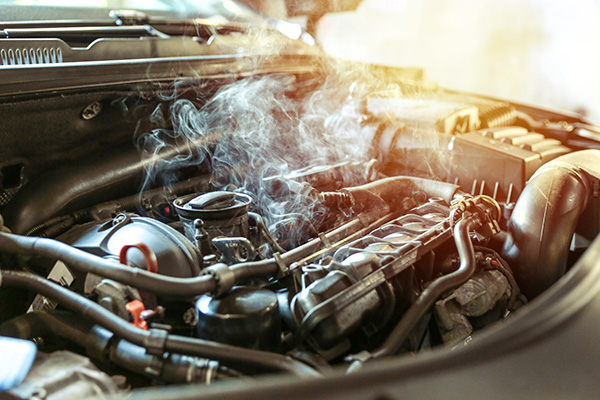
Coolant and exhaust should stay completely separate. Coolant belongs inside the cooling system, moving through the engine, radiator, hoses, and heater core to control temperature. Exhaust gases are produced in the combustion chamber and flow through the exhaust system, leaving through the tailpipe.
When those two paths start mixing, overheating can happen quickly. Exhaust gases entering the coolant can increase pressure, create bubbles, push coolant out, and cause the cooling system to lose its ability to control heat. It is one of the more serious cooling system problems because it can point toward an internal engine sealing issue.
How Exhaust Gases Can Enter The Cooling System
Inside the engine, combustion creates high pressure. The head gasket helps seal that pressure inside the cylinders while keeping coolant, oil, and compression in their own areas. If the head gasket fails, combustion pressure can leak into a coolant passage.
A cracked cylinder head, warped head, damaged engine block, or sealing surface problem can create a similar issue. Once exhaust gases enter the cooling system, the coolant is no longer just circulating fluid. It is being pressurized by combustion gases that do not belong there.
That extra pressure can overwhelm the system. Coolant may bubble, overflow, or get pushed out of the reservoir even before you see a major external leak.
Why Exhaust Gases Cause Overheating
The cooling system is designed to maintain a controlled pressure. That pressure helps raise the coolant's boiling point and keeps the system stable. Combustion pressure is different. It can enter the system in pulses and create pressure the system was never meant to handle.
When exhaust gases mix with coolant, they can create air pockets, reducing coolant flow. Air does not carry heat away from the engine the way liquid coolant does. That can create hot spots inside the engine, leading to temperature spikes.
Coolant may also be forced out of the reservoir. Once enough coolant is lost, the engine has even less ability to stay cool. The result can be overheating, especially under load, on hills, in traffic, or during longer drives.
Bubbles In The Reservoir Can Be A Clue
One common sign is bubbling in the coolant reservoir while the engine is running. Some coolant movement can be normal on certain vehicles, but steady bubbles, hard bubbling, or bubbles that appear with overheating are more concerning.
Bubbling can also come from trapped air, a weak cap, low coolant, or recent cooling system work that was not bled correctly. That is why the symptom needs to be tested. The presence of bubbles alone does not prove a head gasket failure.
Still, if bubbling is accompanied by coolant loss, overheating, white exhaust smoke, rough starts, or coolant being pushed out, exhaust gases in the coolant should be considered.
Coolant May Keep Disappearing
A vehicle with exhaust gases entering the coolant may continue to lose coolant without leaving a clear puddle. Coolant can be pushed out through the reservoir overflow or burned inside the engine if the failure allows coolant to enter a cylinder.
You may top off the coolant, drive for a while, and find the reservoir low again. The ground may stay dry because the loss occurs under pressure through the exhaust, or only when the engine is hot.
Repeated coolant loss should never be treated as normal. If the level keeps dropping, the cooling system needs an inspection before overheating causes more damage.
Warning Signs Of Combustion Gas In Coolant
Internal cooling system problems can show up in several ways. Watch for signs like:
- Coolant reservoir bubbling constantly
- Temperature gauge rising
- Coolant pushed out after driving
- Repeated coolant loss
- White exhaust smoke
- Sweet smell from the exhaust
- Rough startup
- Misfire after sitting overnight
- Heater blowing cold
- Milky-looking oil
These signs do not all appear every time. Some engines only show one or two symptoms at first. Testing helps confirm whether the problem is internal or caused by another cooling system failure.
A Bad Head Gasket Is Not The Only Possibility
Exhaust gases in the coolant often make people think of a blown head gasket, and that can be the cause. But it is not the only possibility. A cracked cylinder head, warped sealing surface, damaged block, or previous overheating damage can also create the same problem.
Sometimes overheating happens first, and the head gasket fails afterward. Other times, the gasket starts to fail, leading to overheating. Finding that order can matter because the repair needs to address the original cause, not only the symptom.
For example, if a weak water pump or a clogged radiator caused overheating, repairing the gasket without fixing the cooling issue could allow the same damage to occur again.
How Technicians Test For The Problem
A proper diagnostic process may include pressure testing the cooling system, checking the cap, looking for leaks, testing for combustion gases in the coolant, checking coolant condition, inspecting oil condition, and monitoring engine temperature. The technician may also check for misfire codes, white smoke, or pressure building too quickly after startup.
The goal is to avoid replacing major parts without proof. Cooling system problems can overlap. A trapped air pocket, bad thermostat, weak fan, clogged radiator, or leaking cap can mimic part of the problem. Testing separates those possibilities from internal engine trouble.
Get Overheating Diagnostics In Cullman, AL, With Guthrie's Auto Service
If your vehicle overheats, loses coolant, bubbles in the reservoir, or pushes coolant out after driving, Guthrie's Auto Service in Cullman, AL, can inspect the cooling system and check for signs of exhaust gases in the coolant.
To diagnose overheating before engine damage worsens, contact us to schedule an appointment.